
Discover the Cases & Sleeves collection: tough, stylish protection for your handheld consoles, controllers and accessories. Built for gaming on the move, they combine smart storage, a secure hold and a gaming look — so you can take your gear anywhere with complete peace of mind.
A case for a retro handheld console is not a comfort accessory: it is what separates a console that ages well from a scratched screen three months down the line. Anbernic, Retroid Pocket, TrimUI, Powkiddy and Miyoo travel in a backpack or a pocket, rubbing against keys and hard edges. This guide helps you decide between a hard case and a soft pouch.
What a console actually goes through in transit
The most common damage comes from everyday wear, through three mechanisms.
Abrasion
An unprotected console rubs against fabric, zips and neighbouring objects. The screen picks up micro-scratches, glossy shells go dull, printed markings fade. It is slow, irreversible, and it weighs on resale value.
Point pressure
A bag dropped roughly, a book resting on top: the pressure concentrates on the parts that stick out, analogue sticks and triggers first. This is where a hard case makes the difference, because it spreads the load across its whole structure.
Small impacts
A console falling from a coffee table takes a moderate but localised amount of energy, often on a corner. A padded hard case absorbs part of it; a fabric pouch merely delays the contact.
Hard case or soft pouch
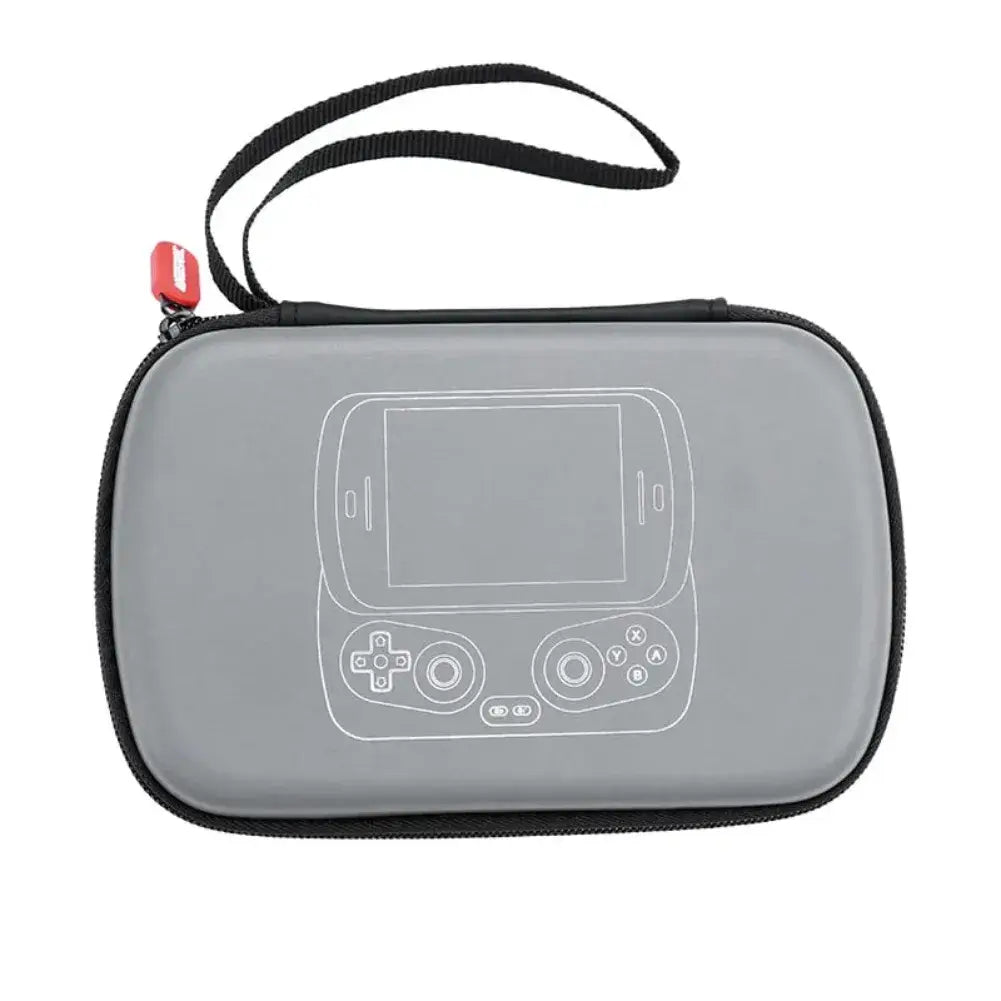
The hard case
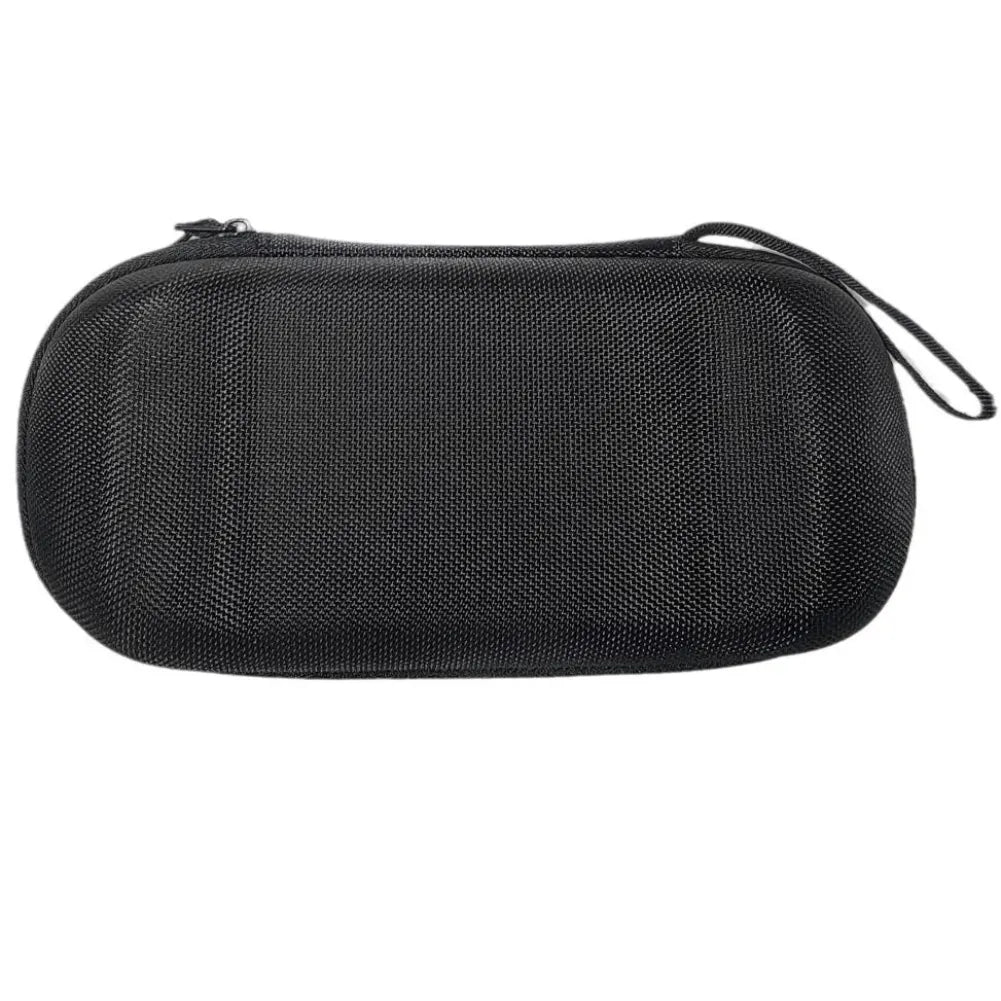
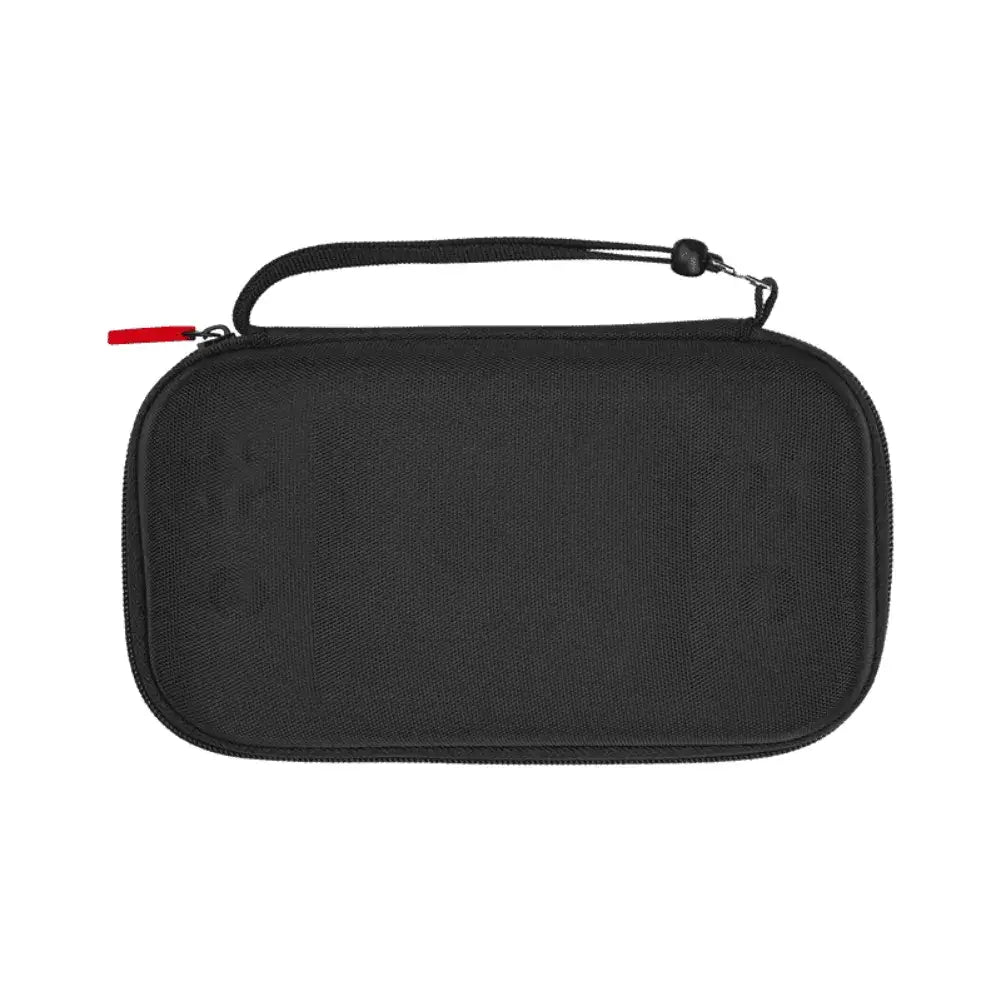
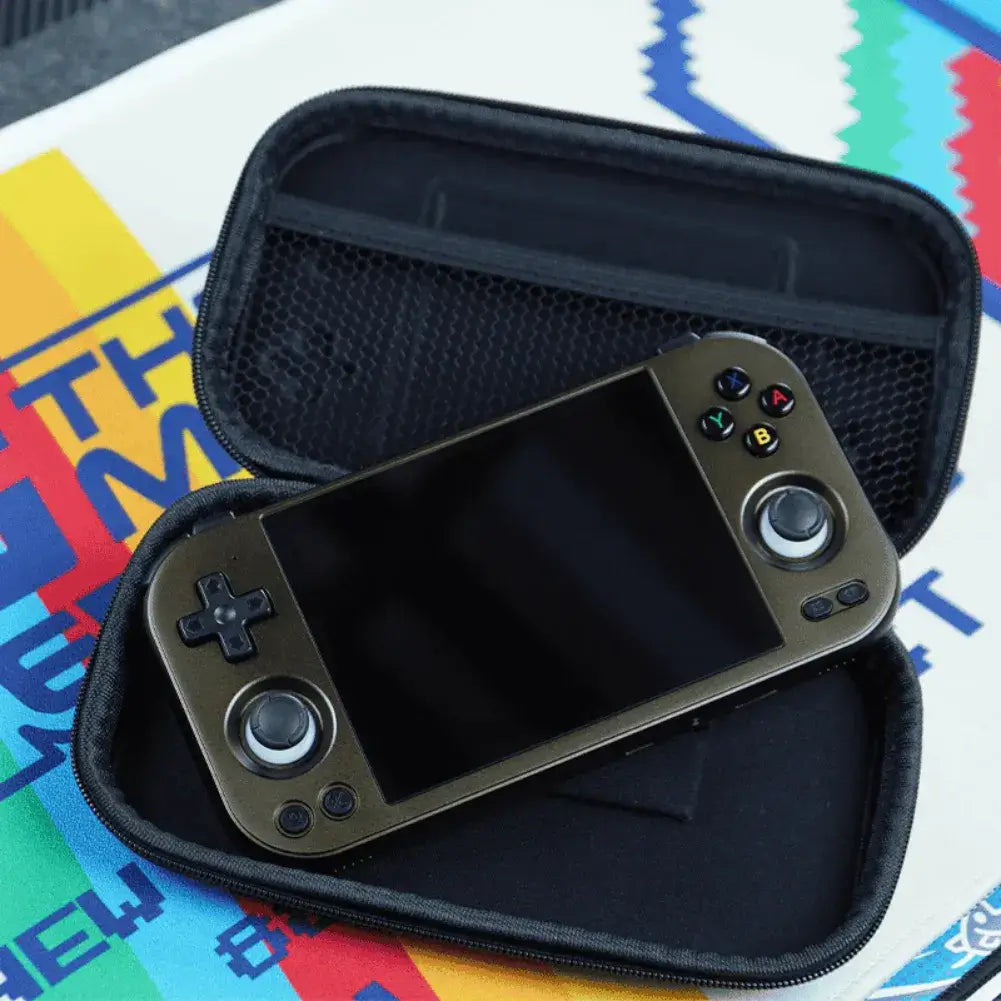
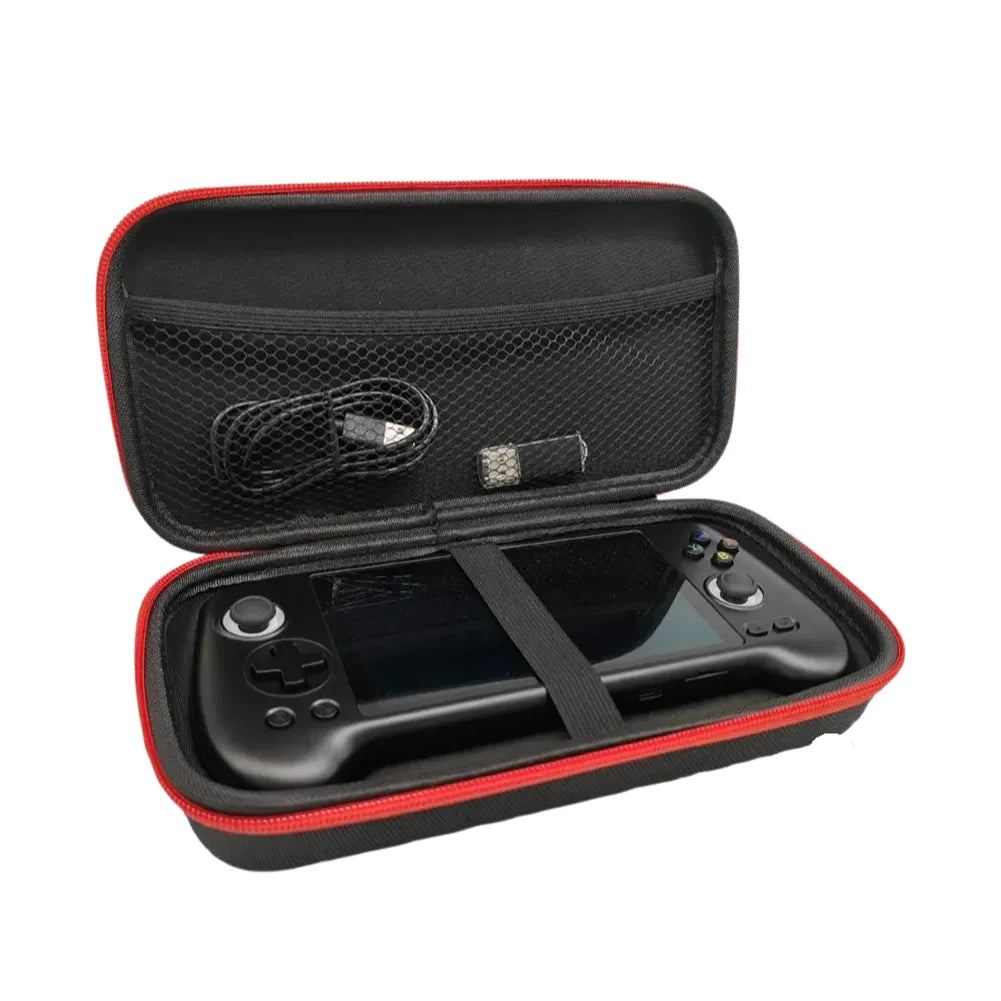
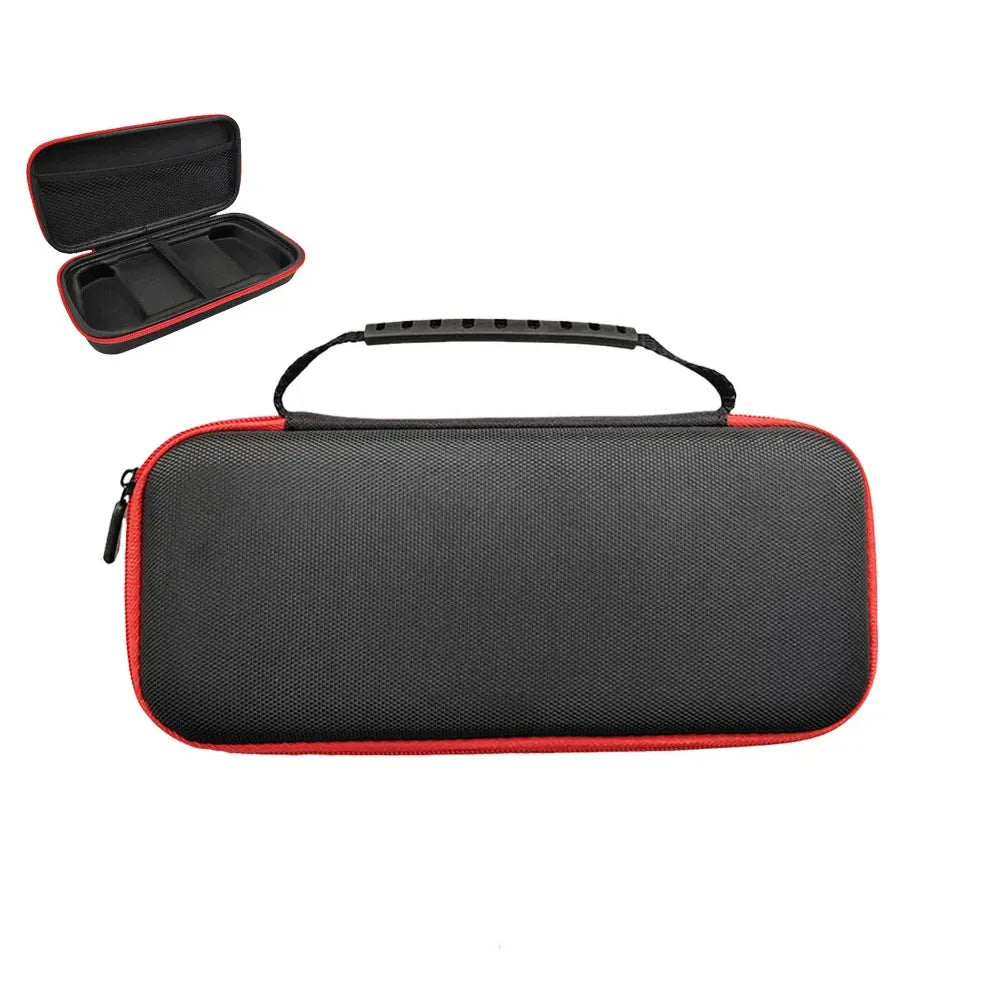
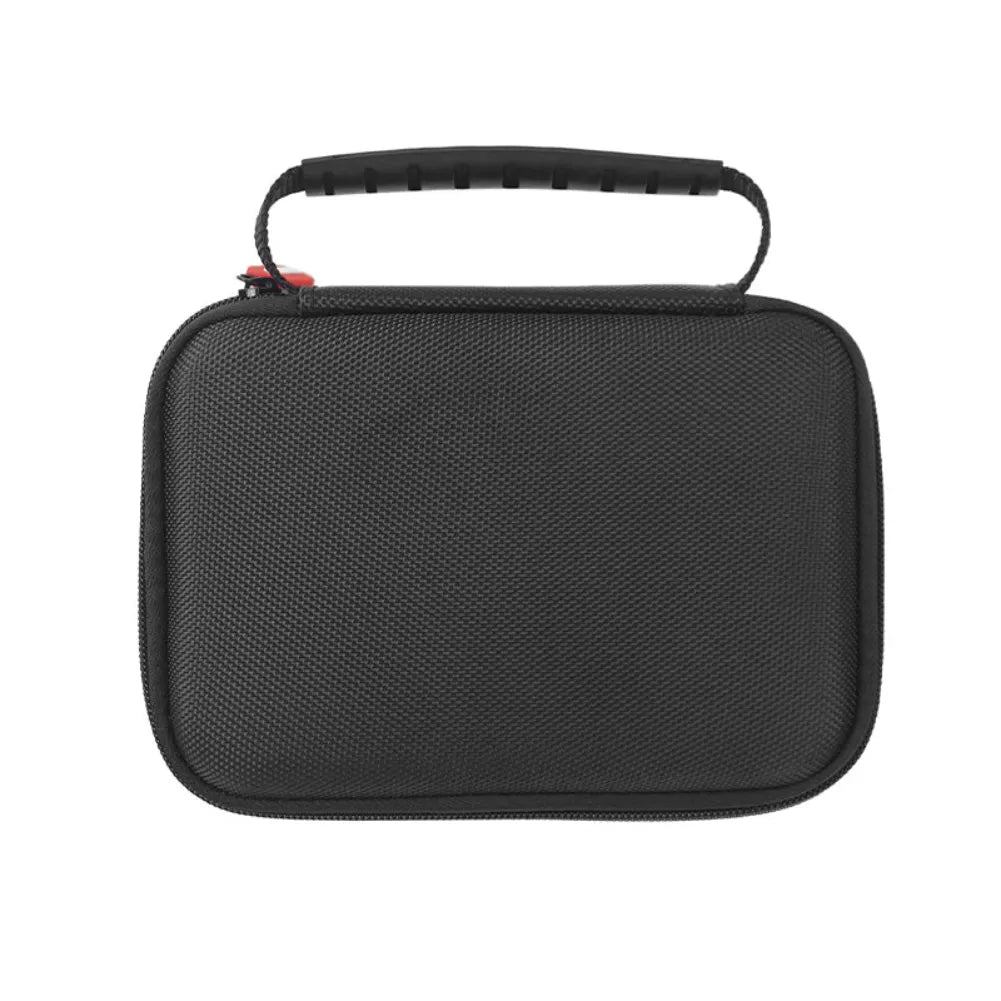
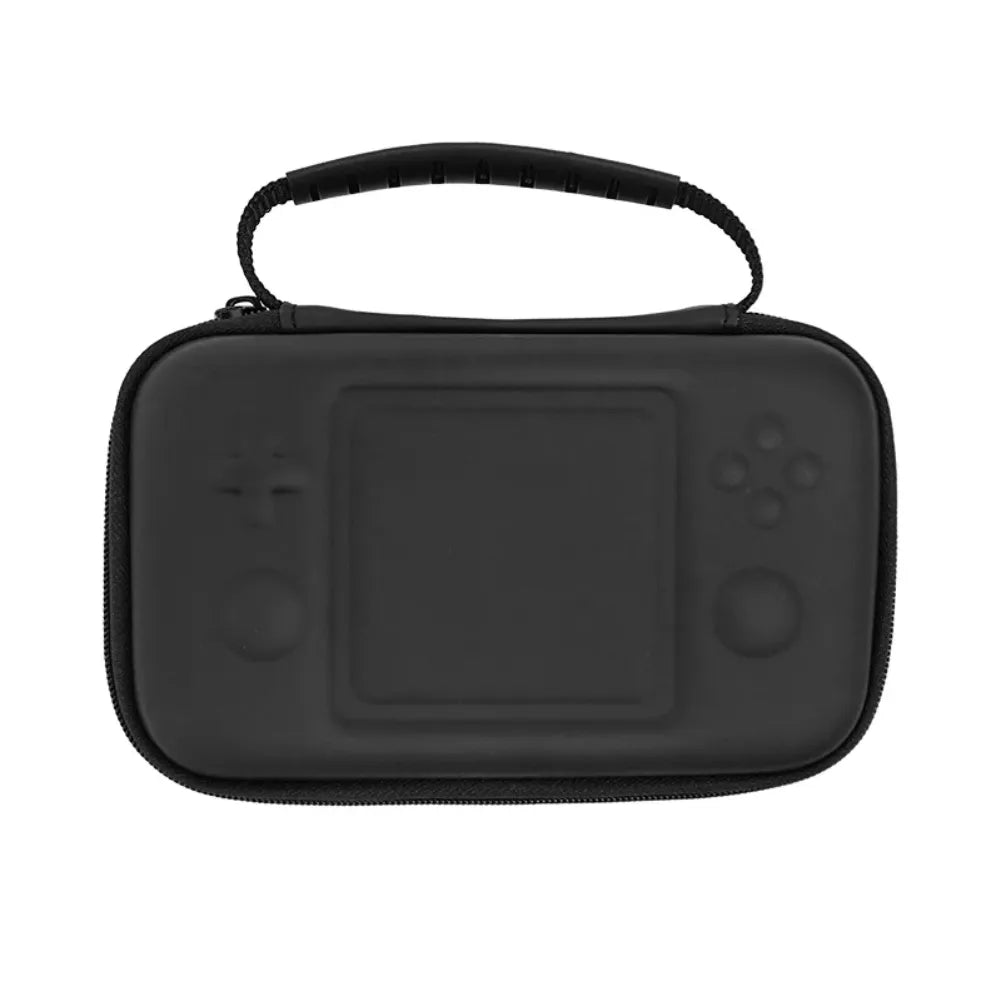
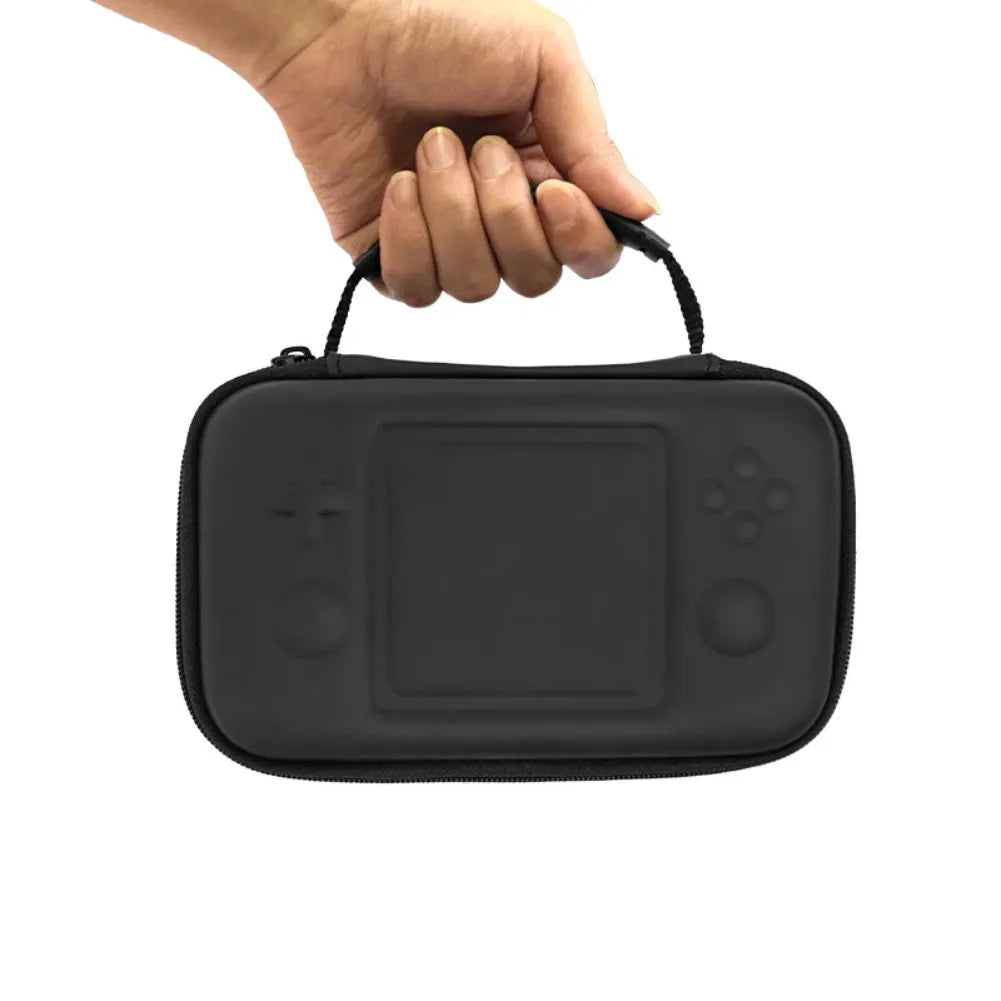
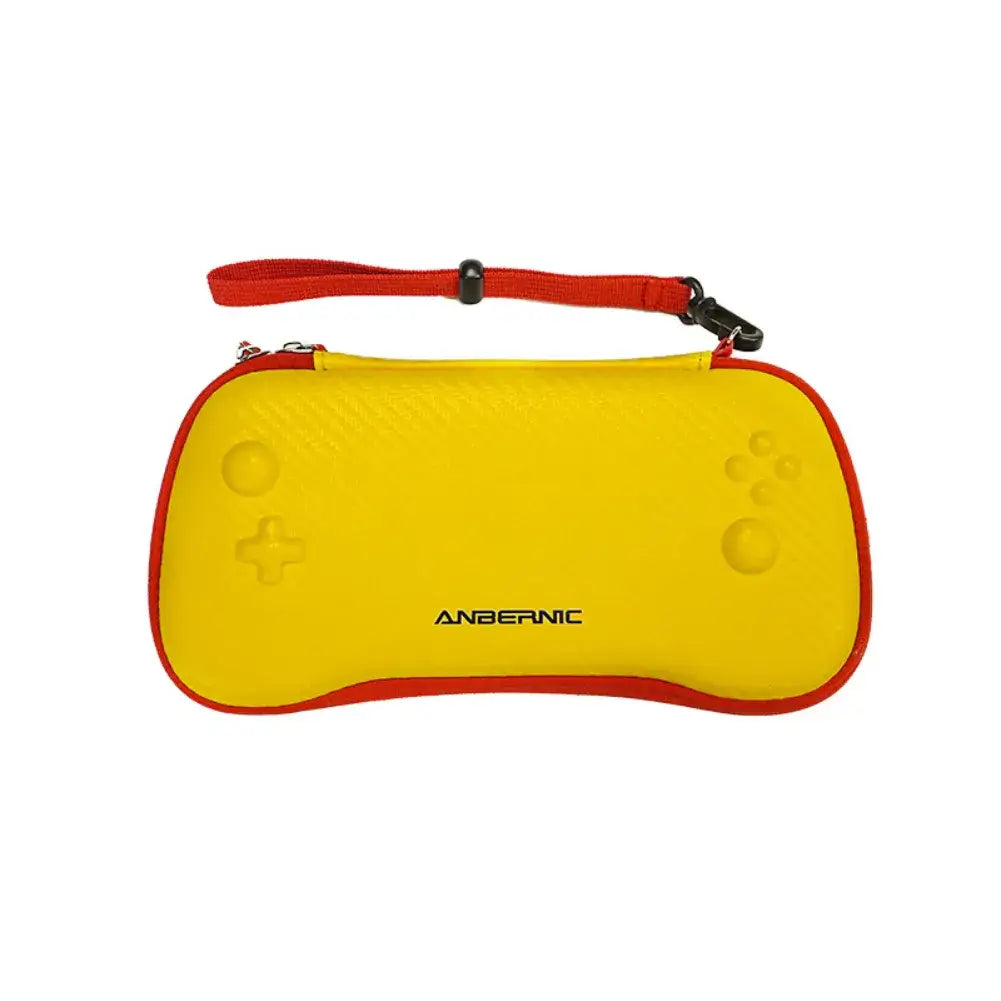
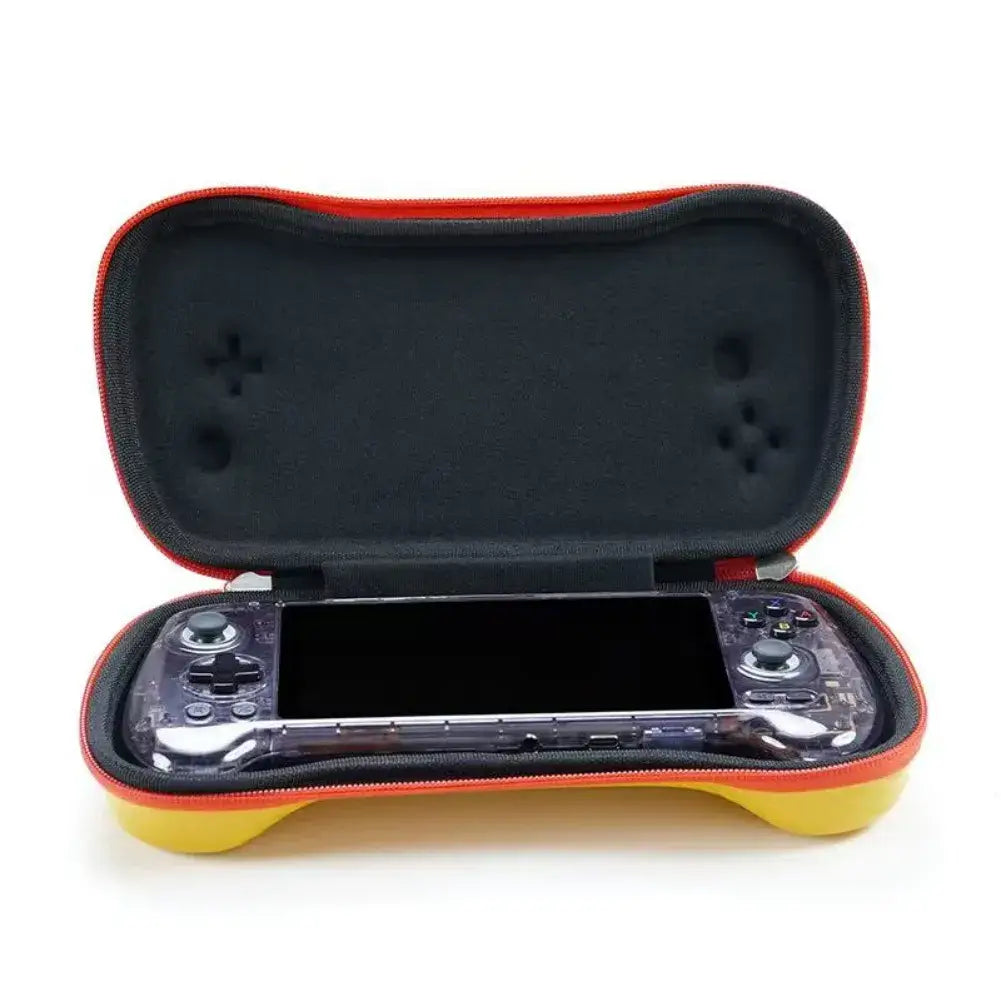
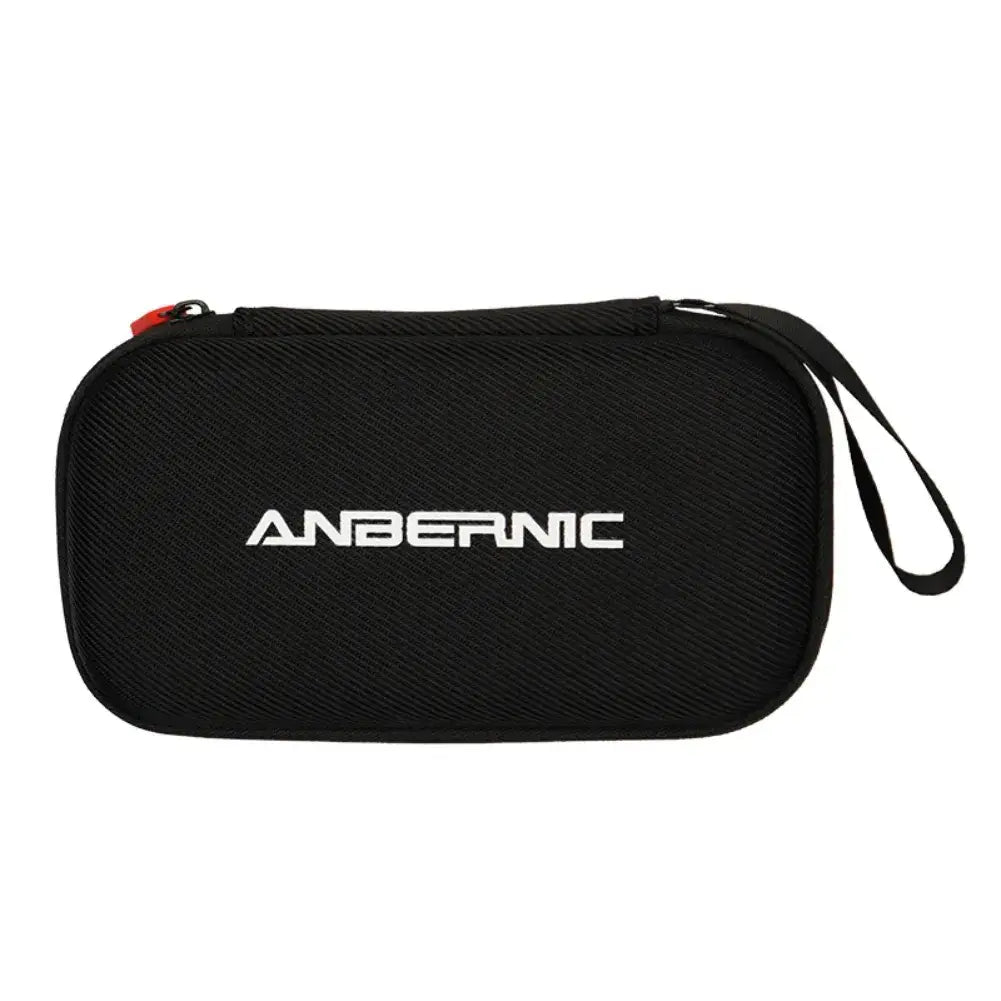
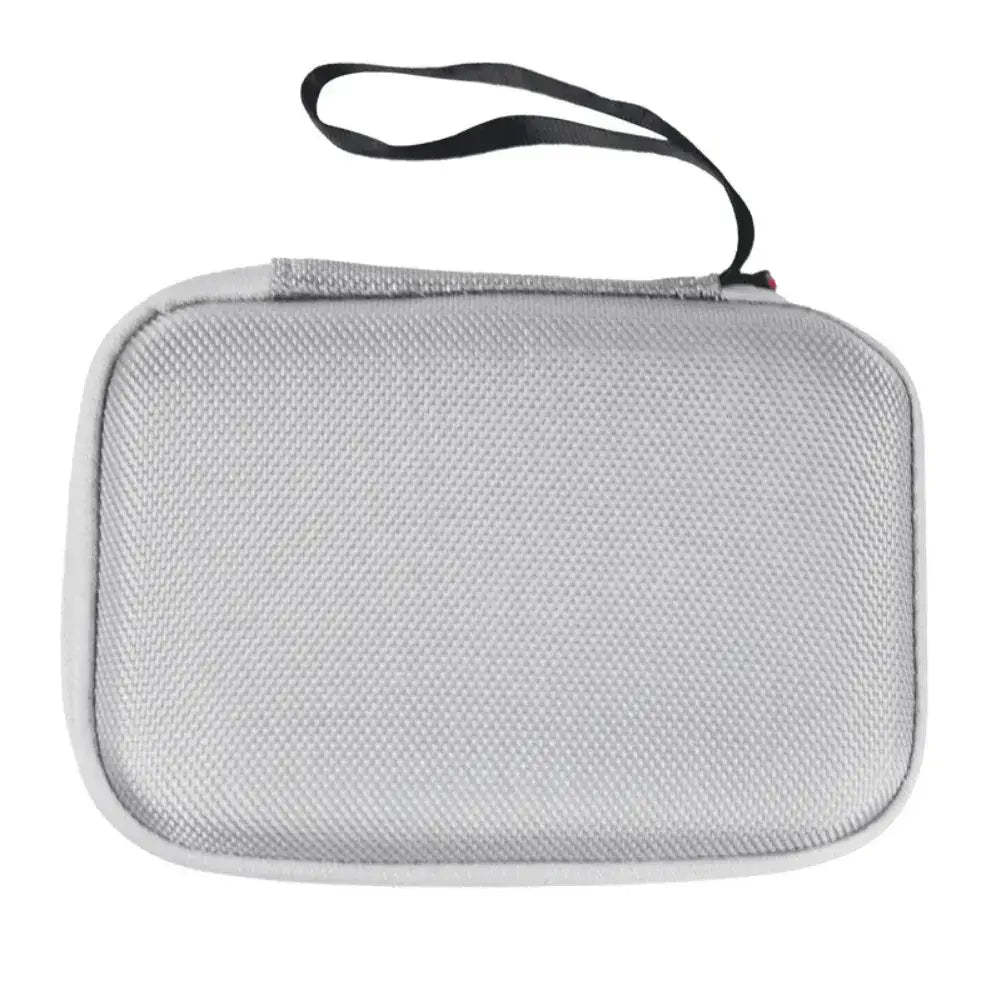
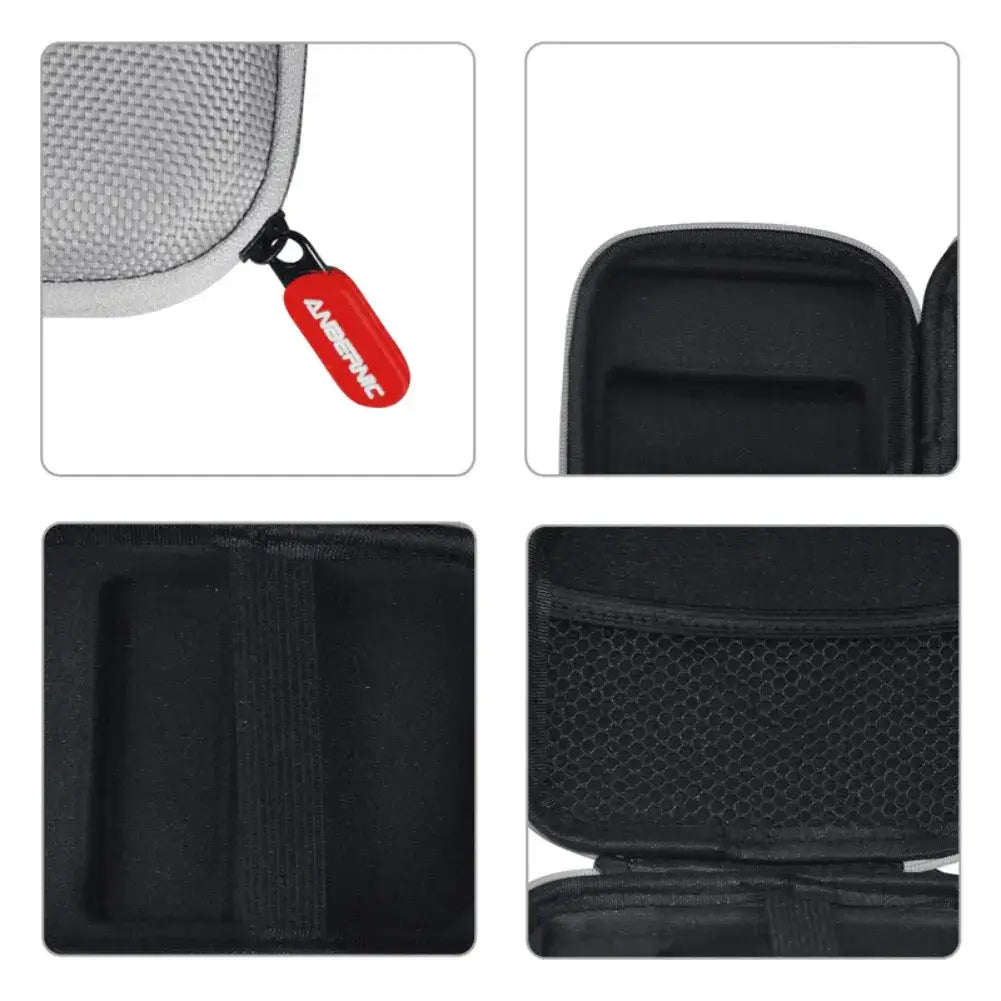
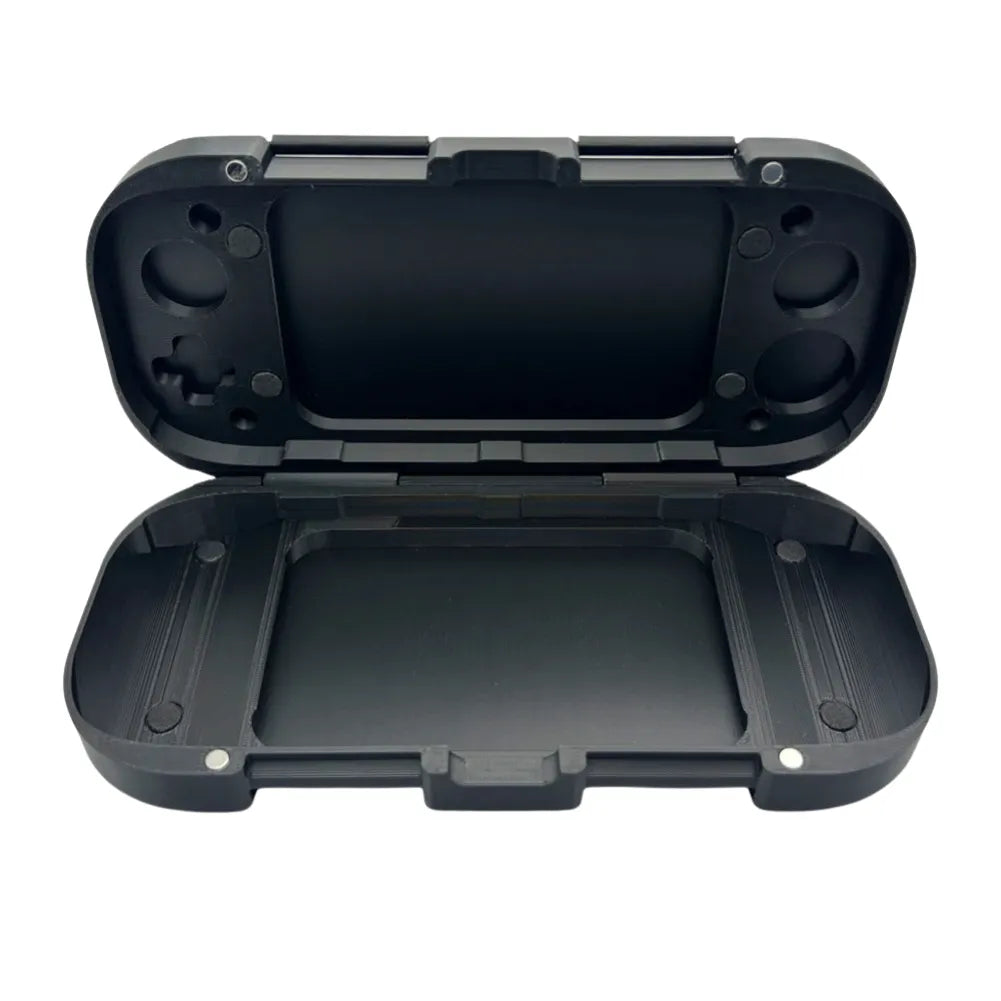
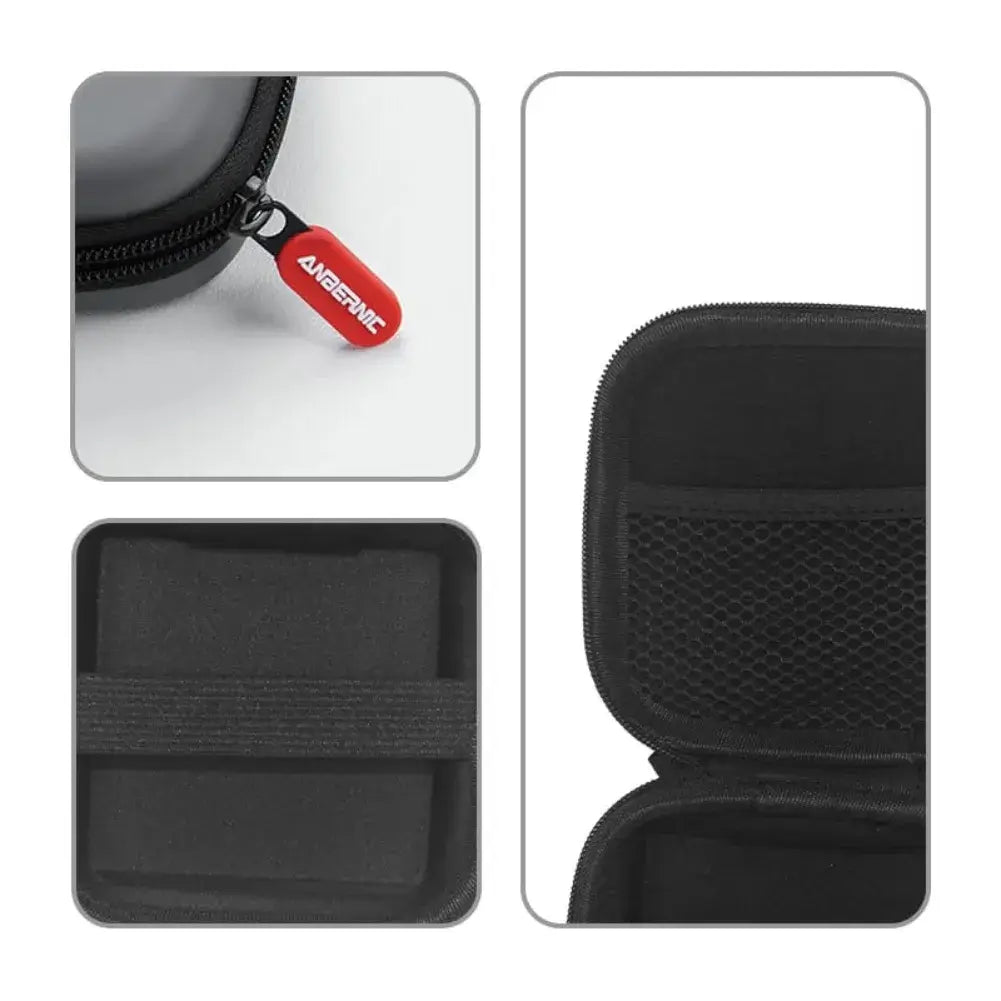
A moulded structure, usually EVA covered with a technical fabric, it keeps its shape even when empty, protects against crushing and corner impacts and holds the console in place thanks to an internal cut-out. Its drawback: a fixed volume. The one to pick for a backpack.
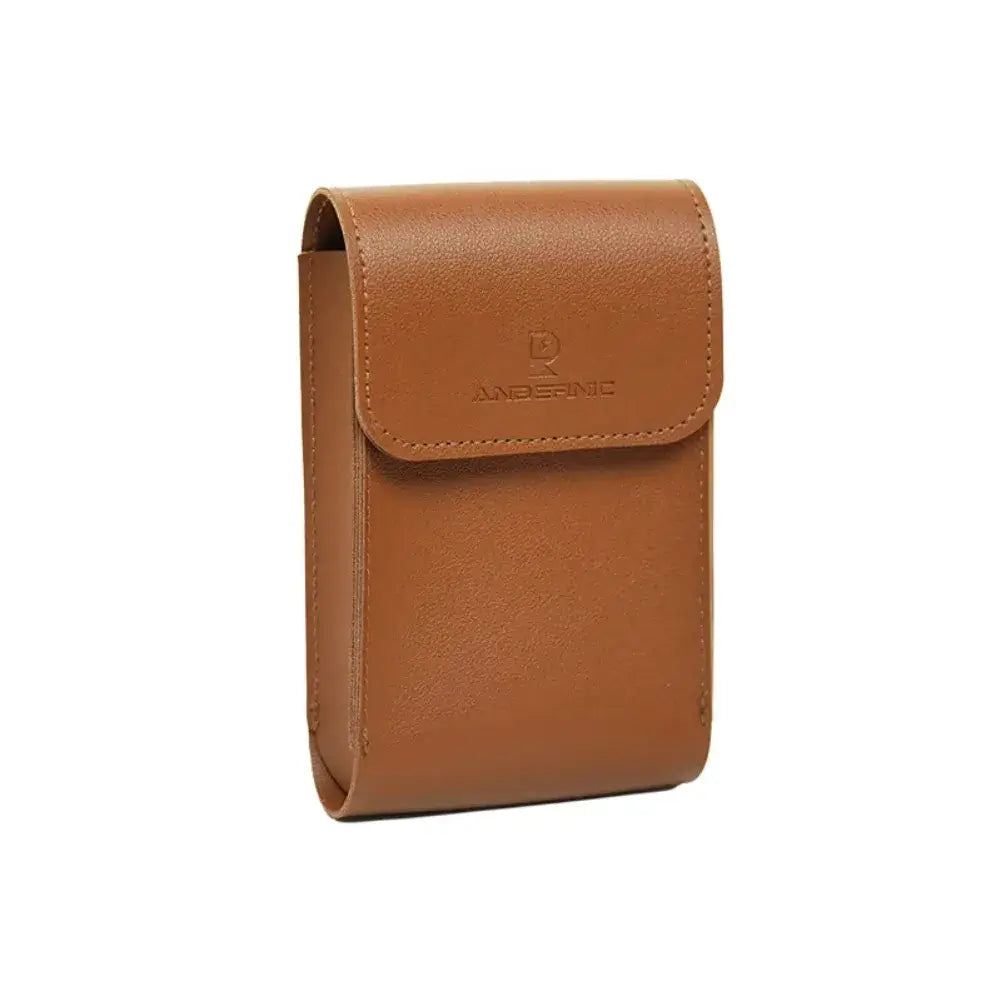
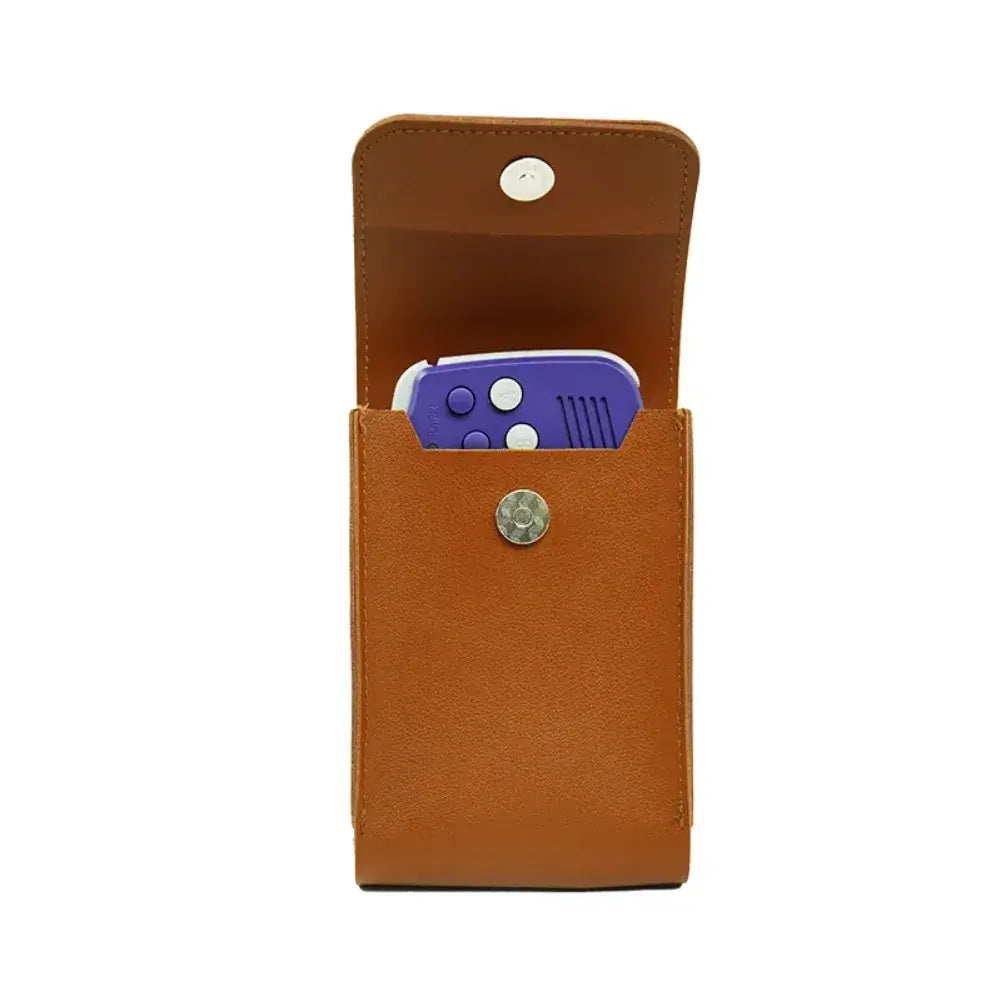
The soft pouch
Slimmer and lighter, it disappears into an already loaded bag. It handles abrasion well but offers almost nothing against pressure or impacts. A good answer for a short trip or for storage at home.
The details that make a good case
Compartments for cards and cables
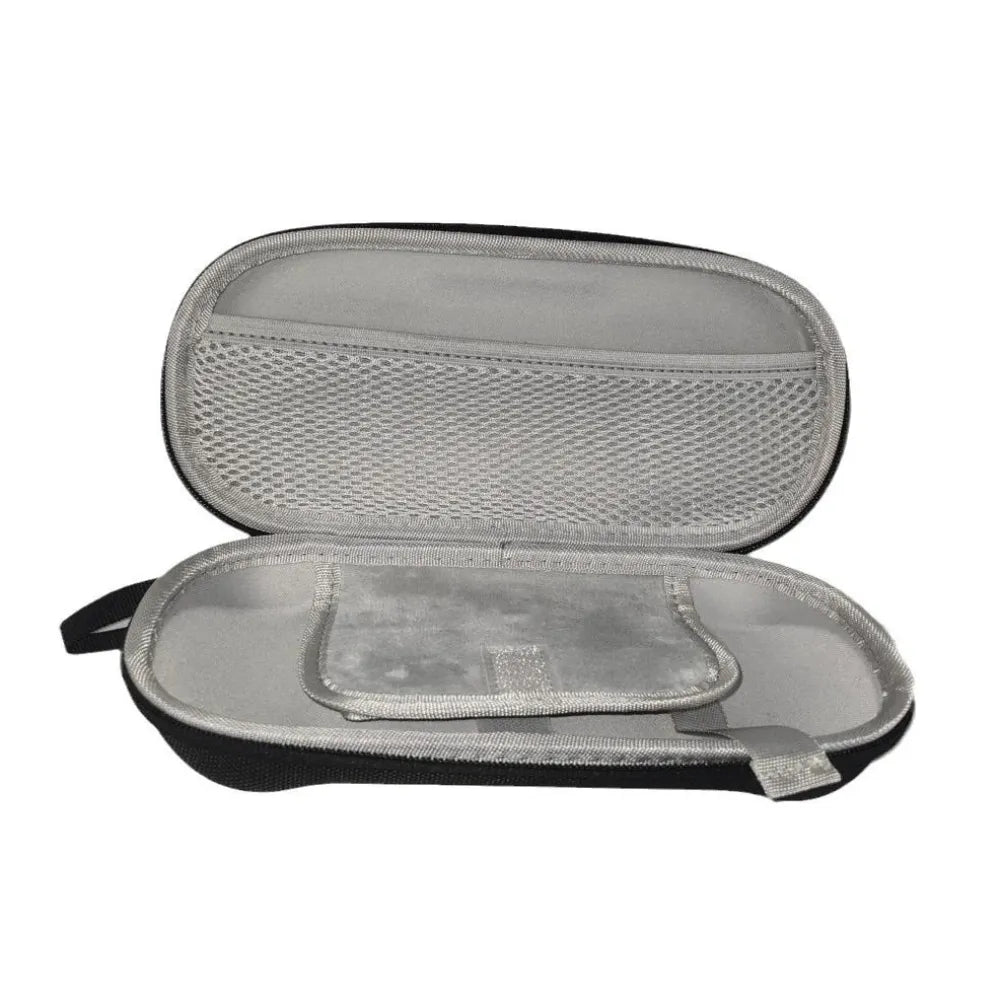
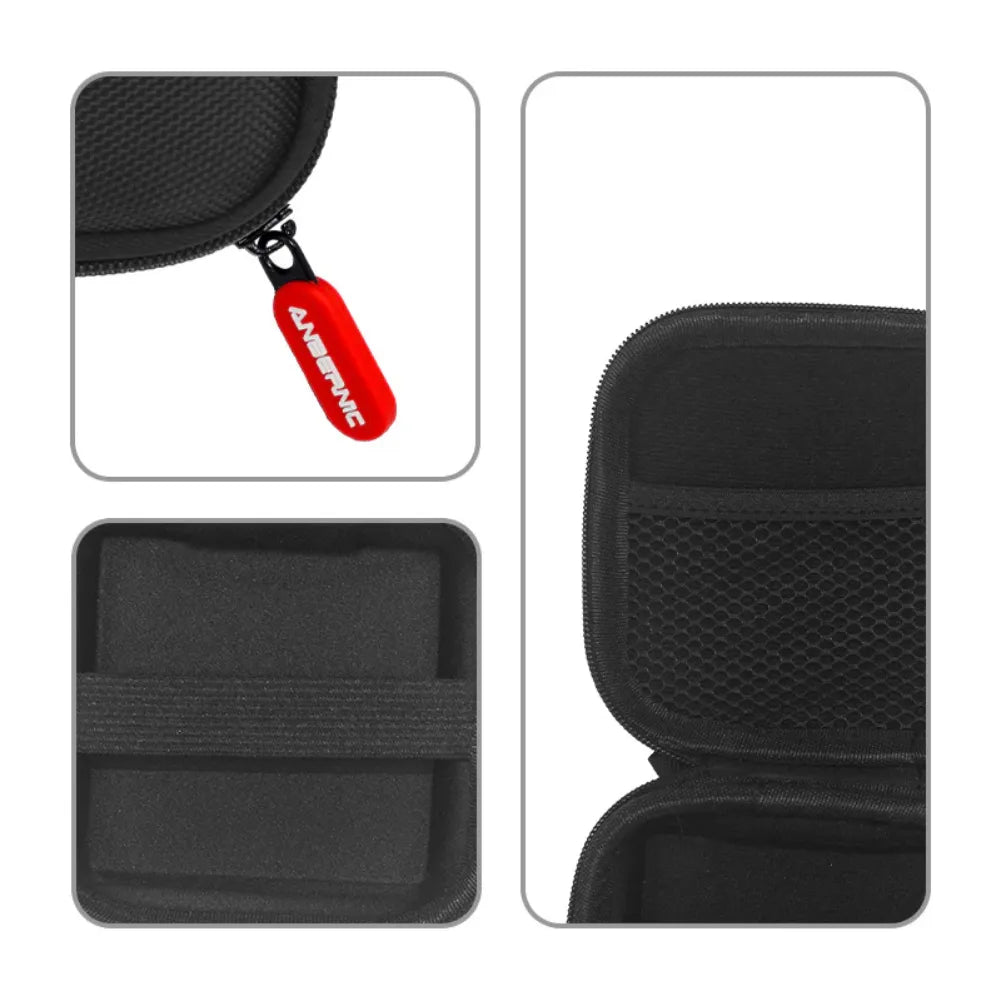
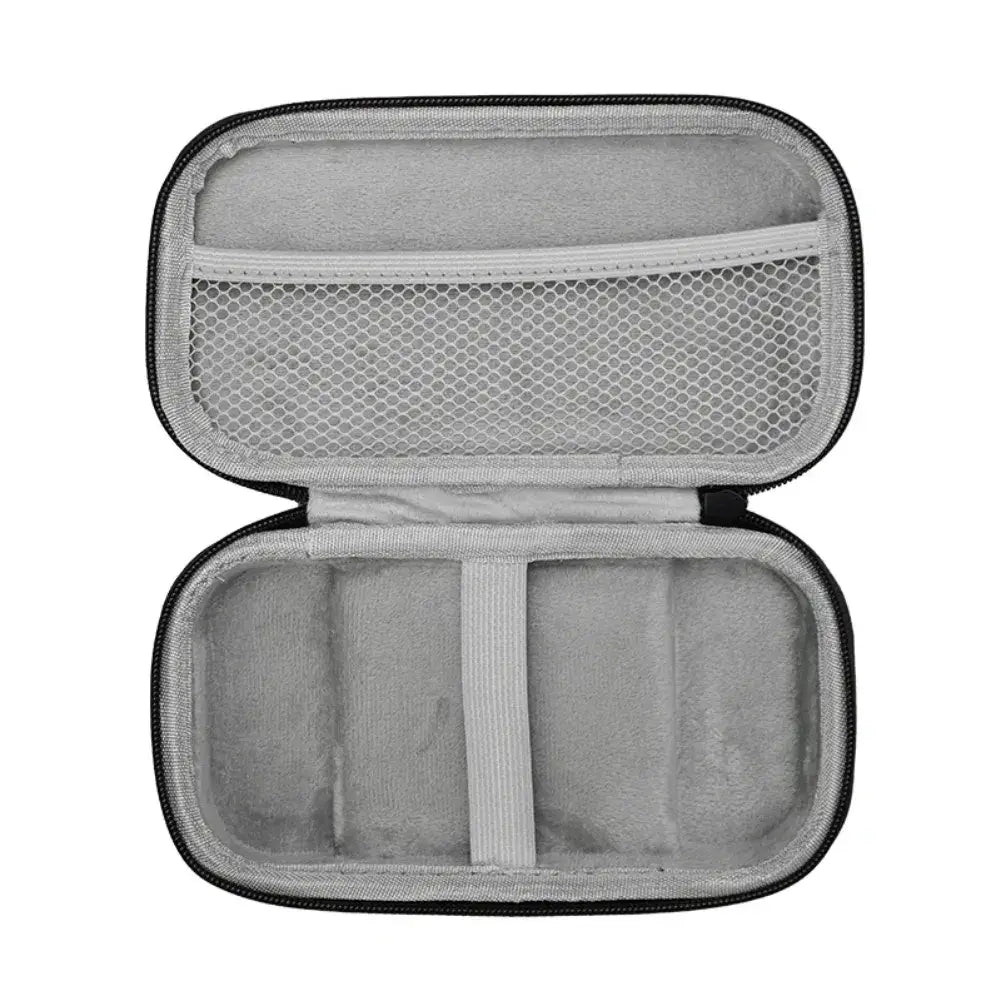
A retro console rarely travels alone: USB-C cable, earphones, spare microSD cards. Cases designed for this use include an elastic mesh pocket or a zipped pocket, sometimes dedicated microSD slots, which stop the card from getting lost at the bottom of a bag.
Interior lining
An overlooked detail, and yet a decisive one. A soft lining, in microfibre or velvet, stops the case itself from scratching the screen through friction. A rough nylon lining can do more damage than no case at all.
Carabiners and closures
A carabiner lets you clip the case to a bag or a belt: handy, but the case is then exposed, which argues for a hard shell. A three-sided zip makes it easier to take the console out; check that the slider is protected by a flap.
Choosing according to the exact size of your console
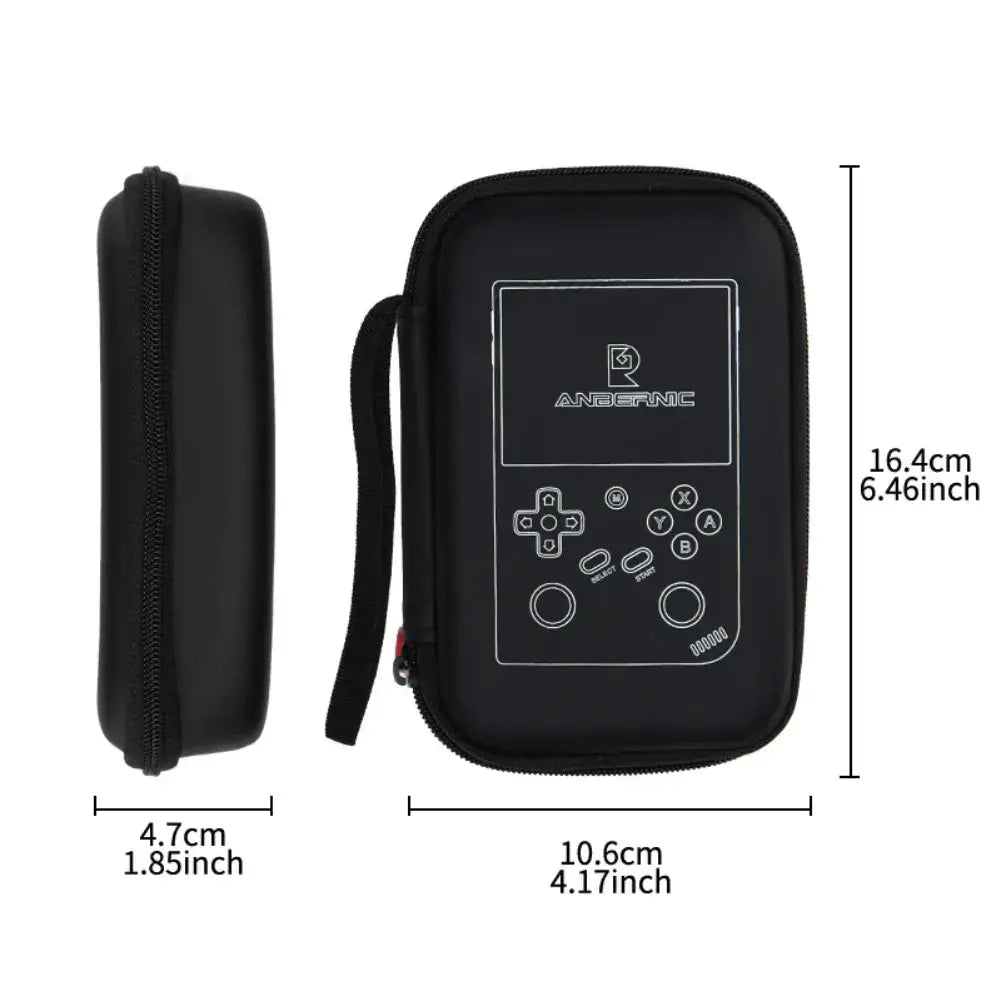
This is the most important point on this page. Retro handheld consoles come in very varied formats: compact vertical, wide horizontal, clamshell, slider, screens from 3.5 to 5.5 inches. Two consoles from the same brand a generation apart can differ by several millimetres. A case that is too big lets the console knock against the walls at every step; a case that is too tight forces you to squeeze it shut, and the pressure then falls on the most fragile parts.
A generic case does not protect the sticks
Universal cases are cut for an average volume and have a flat base. Analogue sticks, however, protrude above the plane of the console: the lid presses down on them, and prolonged pressure can lead to drift or premature wear of the mechanism. A case designed for a specific model leaves clearance above the sticks. So go for a model-specific case and check compatibility on the product page.
Our selection
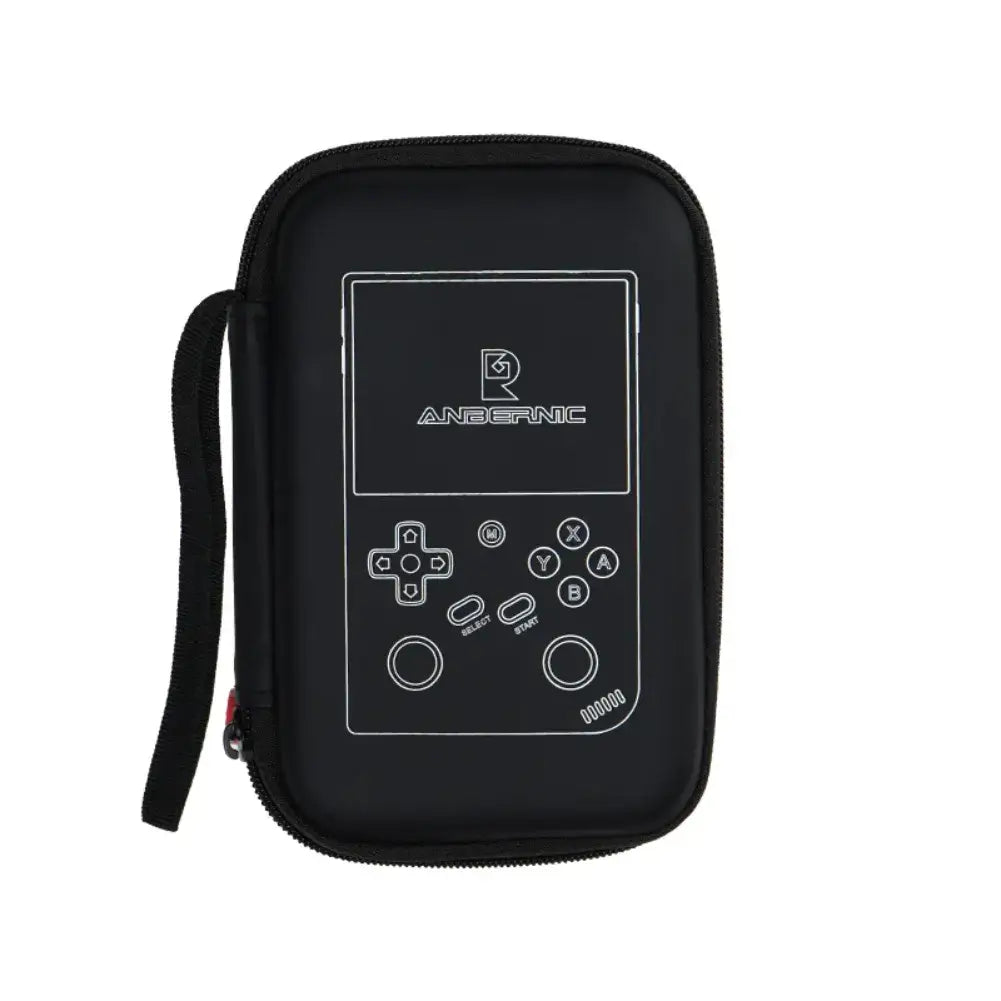
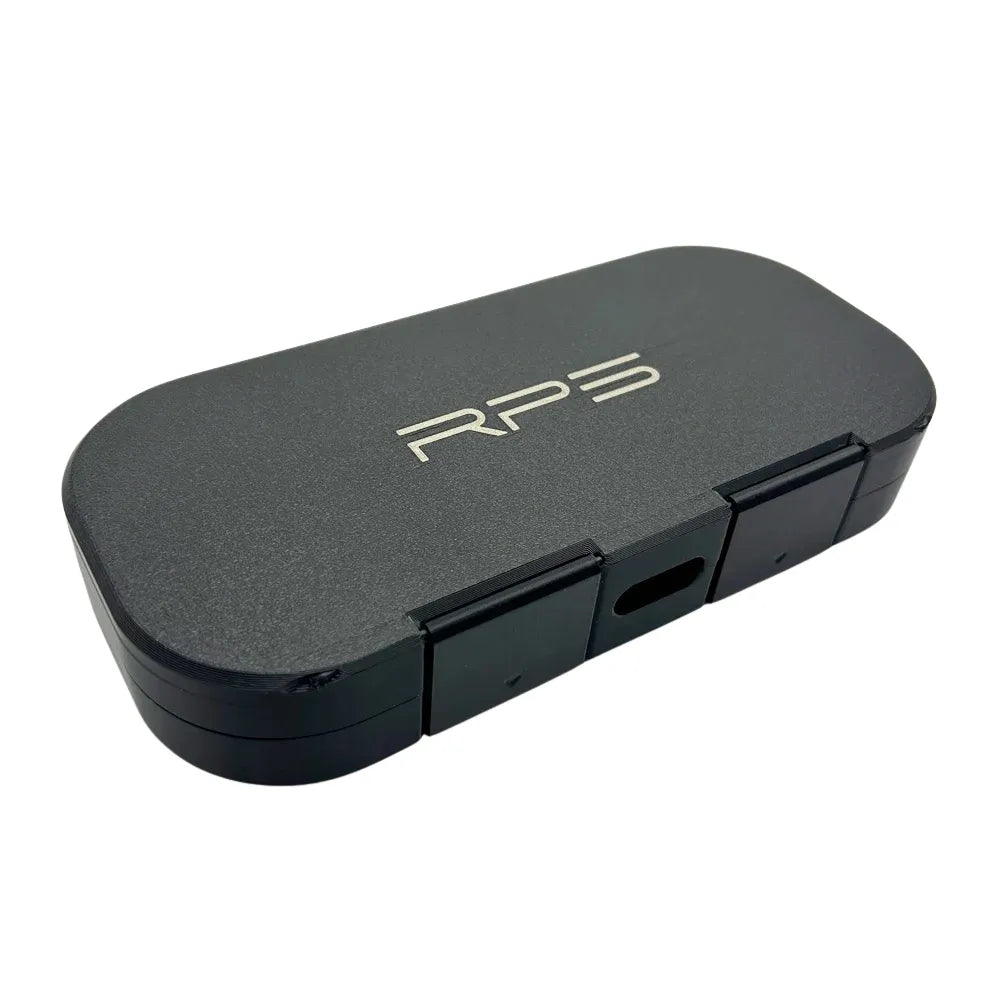
Our catalogue favours cases designed model by model. For the Anbernic ecosystem, the Anbernic RG 35XXPro case, the RG 40XXV hard case, the hard case for RG CubeXX, the RG476H case and the RG406H case are listed as hard cases. For compact or clamshell formats, see the RG353V case, the RG34XXSP case and the RG Slide case. On the Retroid side, the ultra-tough carrying case for Retroid Pocket 5 and the Retroid Pocket 5 protective case cover the same model. The RG556 case, the RG 477M case, the RG557 case and the RG34XX case round out the range. For the exact interior layout, refer to each product page.
Comparison table
| Product | Target console | Stated type | Other mention in the title |
|---|---|---|---|
| Anbernic RG 35XXPro case | Anbernic RG 35XXPro | Hard | Protection |
| Anbernic RG 40XXV hard case | Anbernic RG 40XXV | Hard | — |
| Hard case for RG CubeXX | Anbernic RG CubeXX | Hard | Protection |
| Anbernic RG406H case | Anbernic RG406H | Hard | Carrying |
| Anbernic RG476H case | Anbernic RG476H | Hard case | Console protection |
| RP5 carrying case | Retroid Pocket 5 | — | Ultra-tough |
| Anbernic RG Slide case | Anbernic RG Slide | Hard | Protection |
| Anbernic RG556 case | Anbernic RG556 | — | — |
Frequently asked questions
Hard case or soft pouch for everyday use?
If the console travels in a backpack with books or keys, the hard case is the obvious choice: it takes the pressure and the corner impacts. The soft pouch suits short trips or storage at home. The deciding factor is the mechanical stress involved, not how long the trip is.
Can a universal case do the job?
It gets you by, but it lets the console move around and its flat base often presses on the analogue sticks, where prolonged pressure encourages wear. A case cut for your exact model remains preferable. Check compatibility on the product page before ordering.
Can I store microSD cards in the case?
Some cases include dedicated slots or a mesh pocket under the lid, handy for carrying a spare card away from scratches. Not every product has them: check the product page for the exact interior layout.
Does a case protect the screen from scratches?
It removes most transit scratches, provided the lining is soft. It does nothing, however, against scratches that happen during play or when you set the console down. Tempered glass matched to your model remains the logical complement to a case.
Should I remove the grip before putting the console away?
Generally yes: a case cut for the bare console does not offer the volume a grip takes up, and forcing it shut creates exactly the pressure the case is meant to avoid. A few models allow for that clearance: check compatibility on the product pages.
Also explore our handheld console accessories, our ergonomic shells and grips and our microSD cards.
Housse ou étui rigide : ce qui protège réellement en transport