Capacitors & recapping

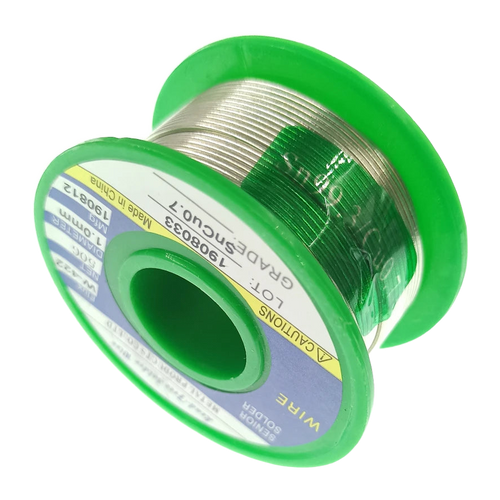
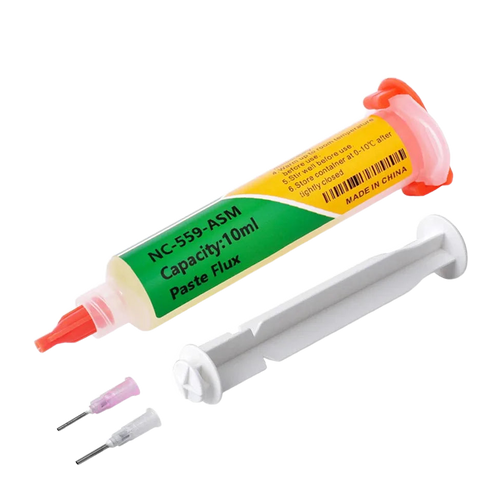
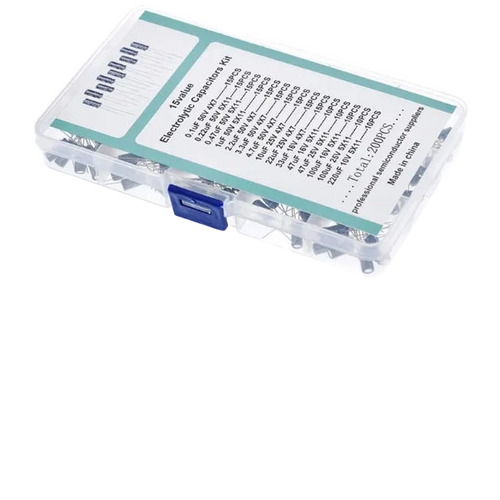
Recapping, or replacing the electrolytic capacitors, brings back consoles and boards whose sound crackles or whose picture smears. This page brings together the through-hole capacitor kit from 16 to 50 V, lead-free flux-cored solder wire and KEK 559 rosin flux in a 10 or 30 ml tube.

3 items3 available right now
Spotting a machine that needs a recap and gathering the right consumables

Capacitance, voltage, format: read the value before ordering

A capacitor is chosen on three figures: the capacitance in microfarads, the working voltage and the size. The kit covers the 16 to 50 V range in through-hole components, that is, with legs, inserted into plated holes. Simple rule: you can go up in voltage compared with the original, never down, while the capacitance must stay the same. Orientation matters too, as an electrolytic is polarised.

Through-hole and surface mount are not worked the same way

Machines from the 1980s and the early 1990s mostly use through-hole capacitors, the ones this kit covers. More recent models and handhelds move to surface mount, far smaller, which calls for hot air and a flux paste. In both cases, KEK 559 rosin flux makes the difference: it cleans the area and makes the solder wet the pad instead of balling up.

What it doesn't do

A recap does not make up for a trace eaten away by an old leak: that has to be bridged with wire. Nor does it replace a diagnosis, since a picture that is completely missing rarely comes from the capacitors. Finally, this kit offers common values, not the exact bill of materials for a given model.

Soldering and desoldering · Soldering consumables · Soldering irons and stations · Batteries and save batteries · Repair and restoration · Spare parts

Questions fréquentes

How many capacitors does it take to recap a console?
It ranges from about ten on a handheld console to several dozen on a more complex board. Note down the list of values on your board before ordering: the kit covers the 16 to 50 V range in common values, which does not guarantee every bill of materials.
Can lead-free solder be used on a board assembled with tin-lead?
Yes, provided you heat a little more: a lead-free alloy melts above 210 °C, so higher than the old one. It is better to remove the old solder cleanly before fitting the new part. The 50 g wire comes from 0.5 to 2.0 mm, with the small diameters suited to handheld boards.
Is flux really essential?
For a recap, yes. KEK 559 rosin flux dissolves the oxidation on old pads and lets the solder spread. Without it, you heat for longer and lift a pad more easily. The 10 ml tube covers several boards, the 30 ml regular use.