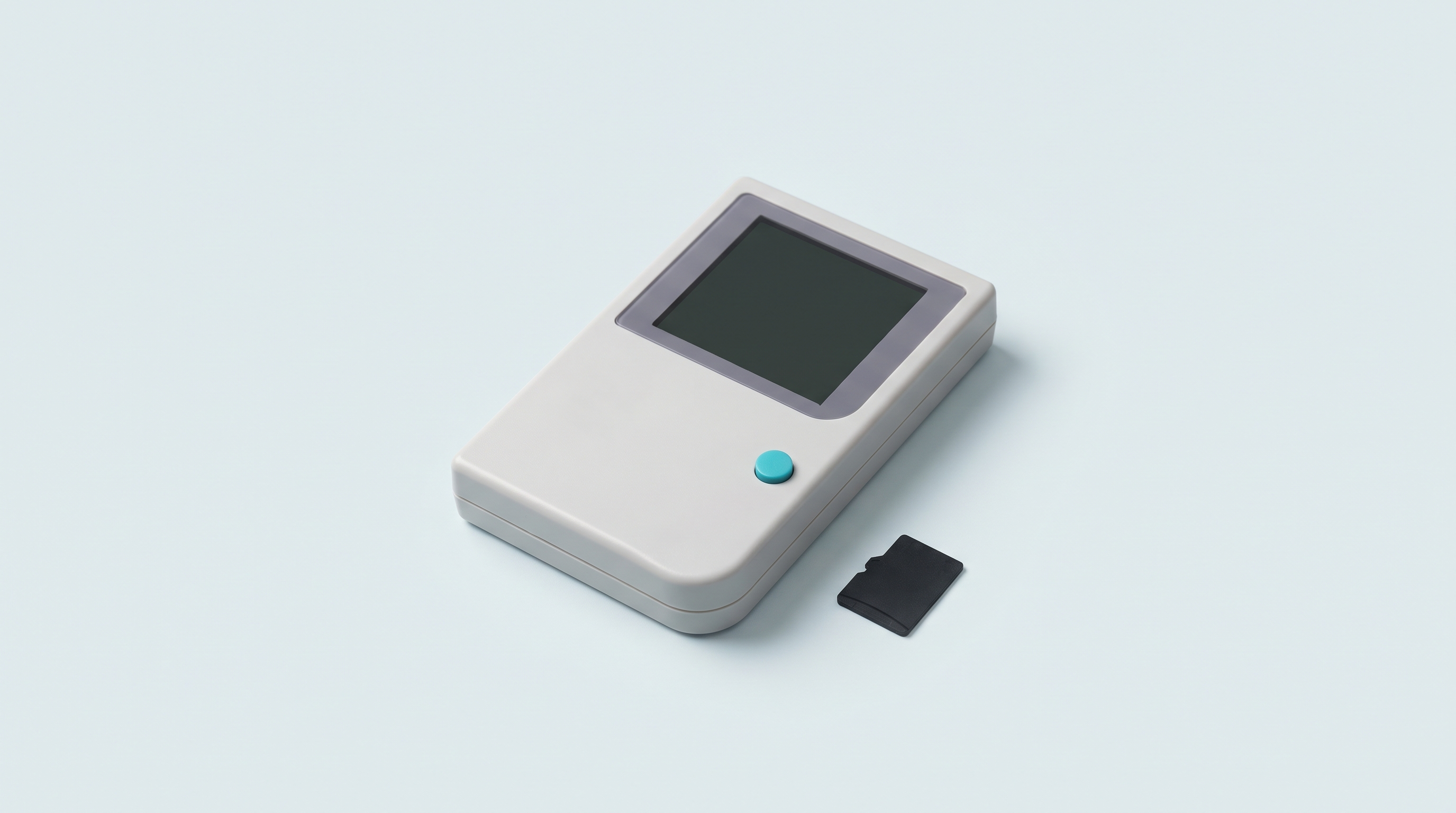
First retro gaming console: the beginner's guide
Updated 21 July 2026
The angle of this guide: you have never bought a retro console before, and we start from scratch — the vocabulary, the main families of machines, the questions to ask yourself and the classic mistakes to avoid on a first machine.
Short answer: there is no universally "best" console — it all depends on how you play. At Fun-Esports, the line-up mainly features multi-system handhelds (Anbernic, Powkiddy, Miyoo, TrimUI, Retroid, AYN, etc.): if you want to play everywhere with the best performance-to-versatility ratio, choose a recent Android handheld (e.g. Retroid Pocket 5, AYN Thor); if you want something ultra-compact and simple in "pocket" format, Miyoo and TrimUI are excellent; for the best price/compatibility compromise, the Anbernic ranges remain a safe choice. See the Handheld Consoles collection at Fun-Esports
In a hurry? Filter all our consoles straight away by budget, screen size and power in our comparison tool →
0) The 4 questions to ask yourself before buying
- What do I want to replay? Only period 2D games, or 3D too (PS1, PSP, even PS2)? That is what sets the minimum power required.
- Where am I going to play? On the move and in my pocket, or settled on the sofa? The format and screen size follow directly from that.
- Am I comfortable with the technical side? Some machines are ready to use, others require installing firmware and organising your files.
- What budget am I willing to spend? A well-chosen simple machine beats an oversized one whose capabilities you will never use half of.
The following sections take each of these points in detail.
1) The main families of retro consoles (at Fun-Esports)
- Android handhelds (versatile and powerful) — larger screen, HDMI, Wi-Fi/Bluetooth, easy updates: ideal for covering everything from light retro to more demanding systems. E.g. Retroid Pocket 5, AYN Thor. See the Retroid Pocket range at Fun-Esports
- Compact "pocket" handhelds (Miyoo / TrimUI) — small, perfect for 2D consoles and the first 3D generation, often very affordable and simple to use. TrimUI Brick — product page
- "Premium" consoles / handheld PCs — for players who also want to run modern PC games alongside retro. E.g. AYN Thor, ASUS ROG Ally X. ASUS ROG Ally X — product page
2) The key criteria for choosing well
- Versatility & compatibility — check the systems covered. The product pages state the supported platforms and the measured performance. Anbernic collections
- CPU / GPU performance — essential for the most demanding 3D systems; recent chips (RK3566, H700, Snapdragon) are far more capable. Anbernic RG557 — product page
- Screen & ergonomics — size, resolution (IPS / AMOLED), quality of the D-pad and buttons: essential for a faithful retro experience. Anbernic RG35XX H — product page
- Battery life & heat — for long sessions on the move; the estimated battery life appears on each product page. Anbernic RG-477M — product page
- Connectivity — Wi-Fi (updates, box art), Bluetooth (controllers), HDMI (TV output), expandable microSD storage. Anbernic RG Slide — product page
- Budget & after-sales — Fun-Esports offers ranges from entry level to high end; check the price, delivery times and returns policy on each product page. Anbernic RG406H — product page
3) Pros and cons — representative models
Anbernic (RGxx family)
Pros: excellent value for money, careful build quality, a very large community, many variants depending on screen size and power. E.g. RG353PS, RG34XX, RG40XX H. Anbernic collection
Cons: the entry-level models reach their limits on the heaviest 3D systems; you need to pick the right version (H / M / S) for your needs. Anbernic RG405M — product page
Retroid Pocket 5
Pros: recent Android, a 5.5" 1080p AMOLED screen and a powerful Snapdragon SoC. One of the most versatile handhelds on the market, able to cover a very wide range of systems. One of our 2026 best-sellers. Retroid Pocket 5 — product page
Cons: a higher price than the entry-level pockets.
AYN Thor
Pros: one of the big new arrivals of 2026. Front-rank power, a large screen, designed for those who want the very top of the Android handheld world. AYN Thor — product page · AYN Odin 2 Portal — product page
Cons: premium positioning, reserved for comfortable budgets.
Powkiddy X55
Pros: a large 5.5" screen, RK3566 processor, HDMI, good versatility for retro and community projects. Good performance-to-price ratio. Powkiddy X55 — product page
Cons: average battery life (~4 h according to the product page).
Miyoo (Mini Plus / A30)
Pros: ultra-compact, excellent 2D rendering and first-generation 3D, very easy to carry and to get to grips with. The king of the pocket format. Miyoo Mini Plus — product page
Cons: not cut out for the heaviest 3D systems. Miyoo A30 — product page
TrimUI (Brick / Smart Pro)
Pros: the choice between a mini pocket format (Brick, 1:1 screen ideal for period games) and a larger screen (Smart Pro). Excellent for 2D and early 3D. TrimUI Brick — product page
Cons: more limited advanced features than on the premium models.
4) So what about the games?
Our consoles ship as hardware: a microSD card, and you decide what goes on it. They all use a microSD card for storage and run the most widespread retro front-ends (RetroArch, EmulationStation), already familiar to the community. Our high-speed microSD cards
To play, several official platforms exist: GOG and Steam for reissued PC classics, Antstream Arcade for streaming licensed arcade games, or Evercade for official physical compilations. Not forgetting the homebrew scene, rich in thousands of original, royalty-free creations.
💡 Unsure about getting started? Our video tutorials, made with a retro gaming specialist, walk you through setting up your console step by step, stress-free.
5) Controllers & accessories
Several of our controllers are compatible with PC / Steam / Android and also suit Raspberry Pi projects. To round out your console: a fast microSD card, a protective case, an HDMI cable (if there is TV output), a Bluetooth controller and a power bank for long sessions. See the controller collection · Retroid Pocket Flip 2 — product page
6) Practical buying advice
- Choose according to your target: 2D consoles & early 3D → Miyoo / TrimUI Brick; more demanding 3D systems → Anbernic H / Powkiddy X55 / Retroid Pocket 5; the very high end → AYN Thor. Retroid Pocket 4 Pro — product page
- Check the product page: CPU/GPU, RAM, screen, connectivity (HDMI), microSD capacity, battery life, Wi-Fi/Bluetooth. AYN Odin 2 Portal — product page
- Buy from the official Fun-Esports product page for secure payment, tracked shipping and the returns policy. Fun-Esports home page
- Think about accessories: fast microSD, case, HDMI cable, Bluetooth controller, power bank. SanDisk / microSD collection
7) Quick recommendations (by profile)
- Budget & 2D nostalgia: Miyoo Mini Plus / TrimUI Brick.
- Best versatility-to-price ratio: Anbernic (RG35XX H / RG34XX).
- Power & screen: Retroid Pocket 5 or Powkiddy X55.
- The absolute high end: AYN Thor.
- Plugging into the TV: go for a model with HDMI output (check the product page).
8) Going further: our other guides
This guide is about a first machine. Once the basics are covered, our three other guides each tackle a specific angle:
- Do you already know which systems you want to play? See our guide to handheld consoles by use case and emulated system.
- Are you starting from a set budget? Read our comparison of retro handheld consoles by price bracket.
- Do you want the pure raw power ranking? See our technical ranking of the most powerful handheld consoles.
In short — the 2026 verdict
One single purchase without overthinking it: an Anbernic range suited to your budget, the best balance.
The best handheld power for modern retro gaming: Retroid Pocket 5, or AYN Thor if the budget allows.
The ultra-portable "pocket" format: Miyoo Mini Plus / TrimUI Brick.